
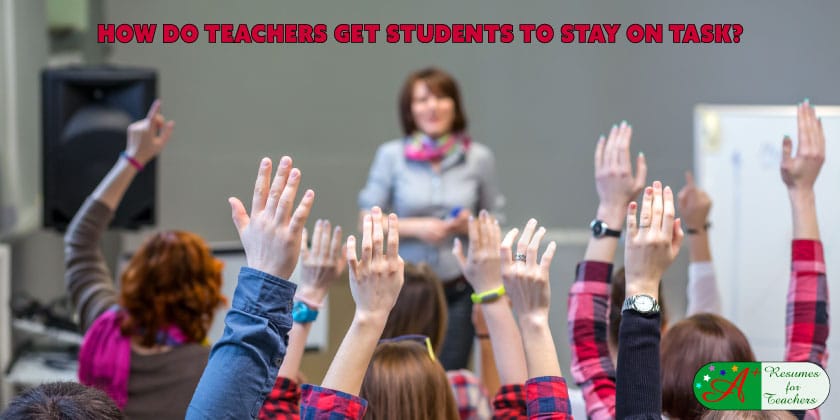
When dealing with classroom disruptions, how do teachers get students to stay on task? Teachers use various classroom management methods.
A teacher’s response to the disruption must be less intrusive for the rest of the class than the initial disruption.
It doesn’t make much sense to react to a minor infraction with all guns blazing and create more of a disturbance than the student did in the first place.
I’ve assembled six steps to get students on a task and deal with any problems before they escalate into large-scale problems for the entire class.
When dealing with disruptions, it is always good to start small and then work your way up if needed. So that is why step one for dealing with minor disruptions is to ignore them. Most attention-seeking behavior requires an audience, so if you refuse to give the student one, they will tend to cease.
If step one fails, you can move to step two, which is using non-verbal cues. Using non-verbal cues allows you to deal with the problem child without disrupting the flow of your lesson. By raising your hand or raising your finger to your lips, you’re addressing the child while not interrupting your entire lesson and losing momentum. If this does not work, you will need to move onto step three.
Moving around the class to stand next to the problem student is a way to make your presence felt. Make it a seamless transition by continuing to teach while you move next to the problem area. It is much harder to act out right next to the teacher.
If none of these steps have proved successful, it’s time to move onto verbal cues by offering support. There is more chance the student will respond to this by offering support than simply by telling them to get back on task. By asking them a question and offering to help, you show the student you care and let them know they are not doing what they are supposed to be without criticizing them.
If step four doesn’t work, then provide them with a couple of options, which will require them to do the work and give them a choice. Providing them choices gives them some control over their situation.
Finally, be prepared to give positive praise to other students on task and the problem student as soon as they act appropriately. This can create a ripple effect, as most students want attention. Especially if the praise is sincere, other students will want to receive praise as well.